




Meghalaya’s Living Root Bridges Nominated for UNESCO World Heritage List
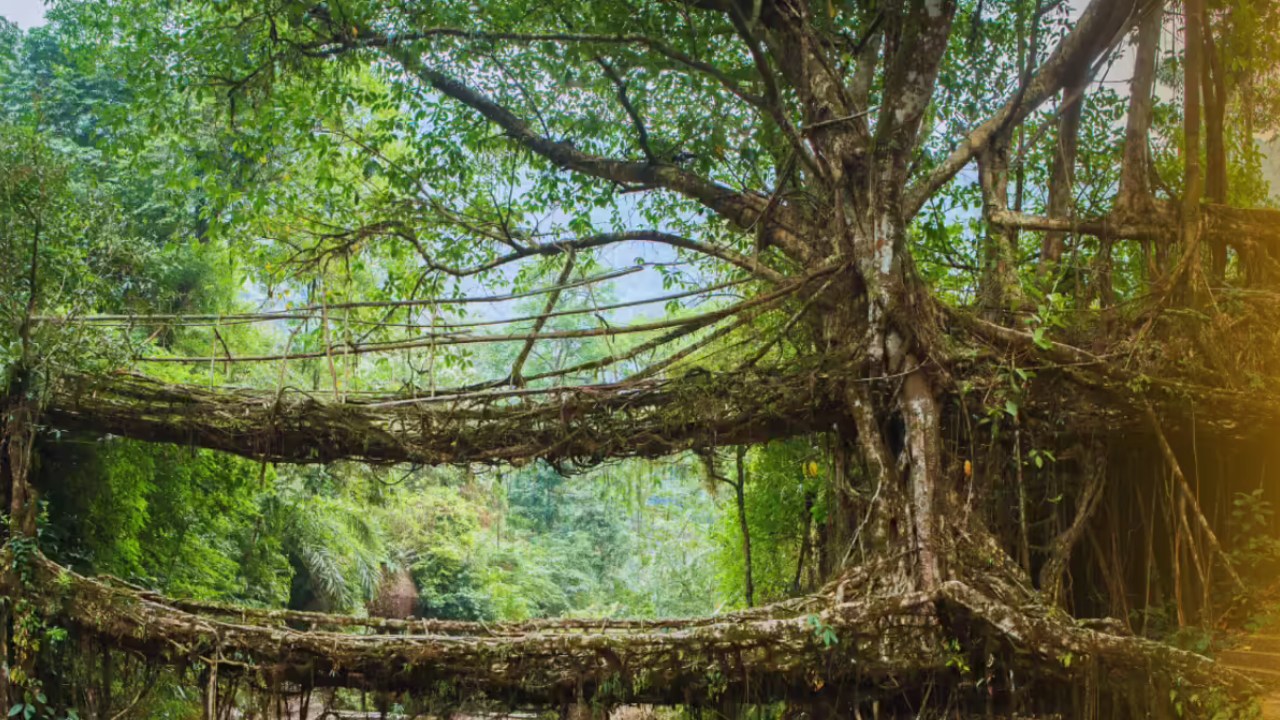
Meghalaya’s iconic living root bridges, locally known as Jingkieng Jri, have been formally nominated for inclusion in the UNESCO World Heritage List, with India submitting the nomination dossier for the 2026–27 evaluation cycle.
According to the Permanent Delegation of India to UNESCO, the nomination dossier titled “Jingkieng Jri / Lyu Chrai Cultural Landscape, Meghalaya” was submitted in Paris by India’s Ambassador and Permanent Representative to UNESCO, Vishal V. Sharma, to Lazare Assomo Eloundou, Director of UNESCO’s World Heritage Centre.
The nomination follows the recent Padma Award conferred on veteran practitioner Bah Halley War for his lifelong contribution to preserving, practising, and promoting the living root bridge tradition—widely regarded as a rare and enduring example of sustainable natural and cultural heritage.
While submitting the dossier, Ambassador Sharma acknowledged the support of Prime Minister Narendra Modi, Union Culture Minister Gajendra Singh Shekhawat, Meghalaya Chief Minister Conrad K. Sangma, Principal Secretary Frederick Kharkongor, officials of the Archaeological Survey of India and the Ministry of External Affairs, along with experts and indigenous communities who have safeguarded the tradition across generations.
The nominated site represents a distinctive living cultural landscape shaped over centuries by the Indigenous Khasi and Jaintia communities, reflecting a deep and harmonious relationship between people, nature, and spirituality. The living root bridges—formed by carefully training the aerial roots of rubber fig trees across rivers and ravines—stand as the most enduring symbol of this heritage.
Welcoming the development, Chief Minister Conrad K. Sangma said on social media platform X that the formal submission marks a significant step towards global recognition of Meghalaya’s living root bridges. He expressed hope that the heritage would be inscribed on the World Heritage List, ensuring due recognition for the indigenous communities who continue to remain custodians of this unique living tradition.