
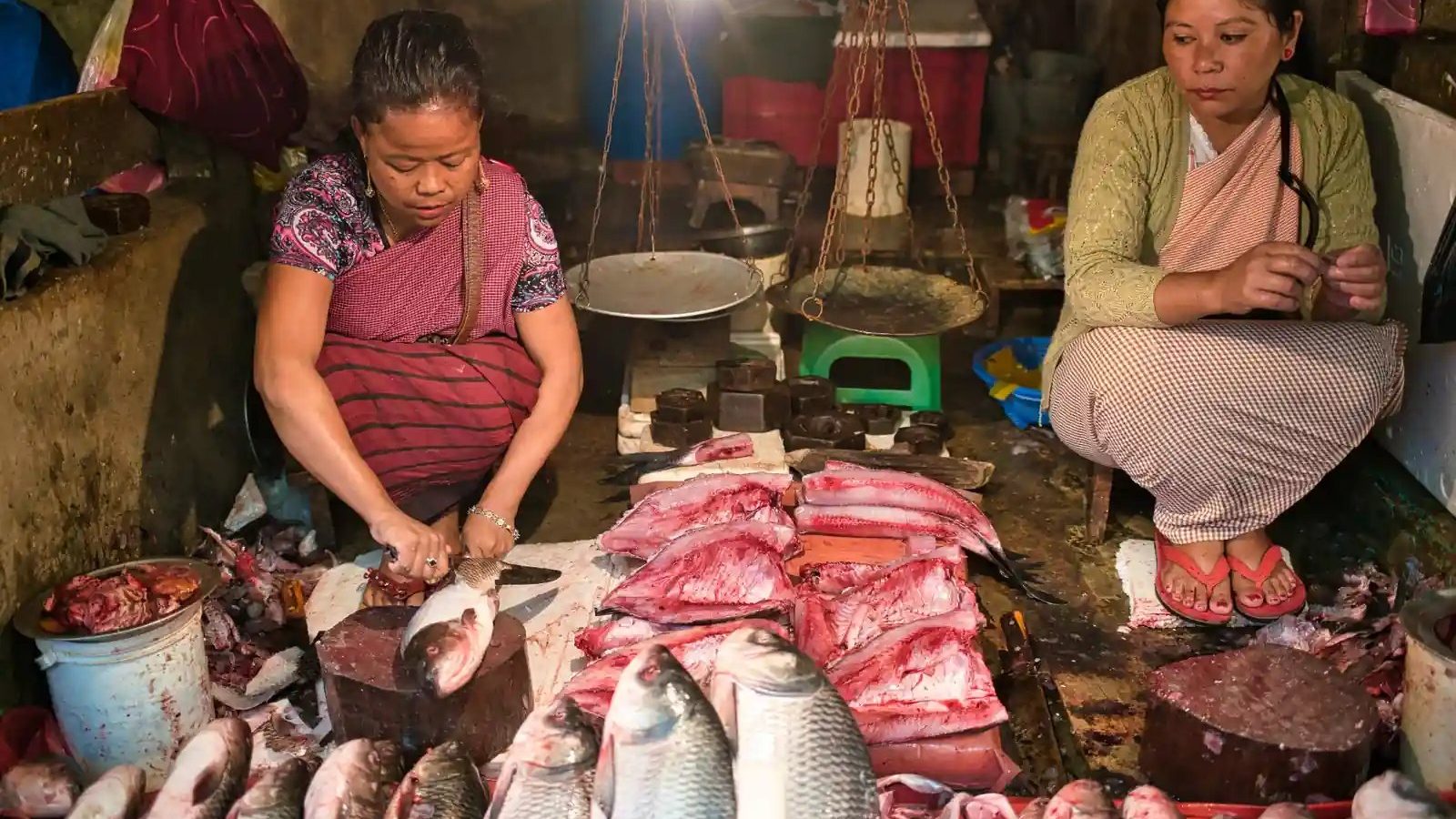
Institutional mandate, community trust, technical depth and market reach. A serious fisheries programme needs all four. We work through partnerships that supply them.
Aquaculture development is a collaborative discipline whether anyone plans it that way or not. A cluster programme touches a State department, a district administration, a bank, several hundred farmers, an equipment supplier, a laboratory and a set of buyers. Consultancies that try to hold all of that alone end up thin in the places that matter most.
We took the opposite route. Living Roots Network is technically specialised and deliberately narrow, and we work in long term collaboration with organisations that are deep where we are not.

Global Association of MSMEs
The Global Association of MSMEs (GAMSME) is an industry association for micro, small and medium enterprises, launched on World MSME Day, 27 June 2026. It works on enterprise development, cluster promotion, market access, access to finance and institutional linkage, with State Charters across the eight North East states and Madhya Pradesh.
Living Roots Network is technical partner to GAMSME for fisheries and aquaculture. GAMSME holds the enterprise mandate, the institutional relationships and the buyer network. We hold the technical side: what gets built, how it is designed, whether it will run, and whether the fish coming out of it will meet the specification a buyer signed for. Neither of us has to pretend to be the other.
The partnership works across
- NEER, the North East fisheries market access programme, where we are the technical partner
- Fisheries and aquaculture cluster development, including common facility centres under national MSME cluster programmes
- Enterprise development and incubation for fisheries MSMEs and first generation entrepreneurs
- Vendor development and buyer connect for fish, shellfish, ornamental fish and value added aquatic products
- Access to finance, compliance and scheme linkage for aquaculture enterprises
- Skill development and value addition programmes in fisheries and allied sectors
NEER: the programme we deliver together
North East Enterprise and Resource Network for Fisheries. From water to market.
NEER is a GAMSME initiative, supported by the School of Livelihood and Rural Development, with Living Roots Network as technical partner. It is a demand led programme connecting fish farmers, fisher collectives and aquaculture enterprises across the North East to institutional, retail and export buyers.
It inverts the usual sequence. Buyers post structured sourcing requirements with volumes, grades and delivery windows; producers align or plan new capacity to meet them; and government support is routed to clusters where a buyer is already waiting. Each cycle runs district level NEER Clinics, where an enterprise leaves with a farm audit, a baseline laboratory record and a dated gap closure plan, followed by the regional NEER Sangam, where buyer ready enterprises meet processors, aggregators, retail and quick commerce platforms, institutional buyers and ornamental exporters.
School of Livelihood and Rural Development
The School of Livelihood and Rural Development, SLRD, is a rural development institution with more than two decades of field presence and offices in Bhopal and Guwahati. Its work spans rural enterprise development, producer institution building, natural resource management, watershed work, training and extension, and it has reached over 110,000 beneficiaries across more than ten states.
Aquaculture projects are village projects. They need an organisation that was present before the programme started and will be there after it ends, that knows the households, that can hold a producer company together through its difficult second year, and that understands a pond as one part of a farming system involving land, trees, soil and water. SLRD brings that depth. We bring the aquaculture specialisation into it.
The partnership works across
- Formation and strengthening of farmer producer companies, cooperatives and fisher groups
- Community mobilisation and long term field presence in project locations
- Farmer training, extension and demonstration units
- Integration of aquaculture into wider rural livelihood systems covering agriculture, agroforestry, soil health and water
- Watershed and water resource work that makes aquaculture viable in the first place
How the three of us work together
On NEER and on cluster scale work generally, the three organisations come to the table together with roles separated clearly enough that a client always knows who is answerable for what.
- GAMSME leads. The enterprise, cluster and market side: institutional linkage, MSME scheme access, buyer and vendor development, and the programme mandate.
- SLRD supports implementation. Mobilisation, producer institution building, training and long term field presence.
- Living Roots Network is technical partner. Aquaculture design, technology integration, project development and project management, laboratories and quality systems.
For a department, a funder or a buyer this means one relationship and three depths of capability, with no gaps between them and nobody claiming expertise they do not have.
Technology and knowledge partners
Beyond these core collaborations we maintain working relationships with aquaculture technology providers and equipment manufacturers, research and academic institutions, and standards and certification bodies, in India and in other countries. These relationships are the route by which proven practice reaches projects here, and the route by which our services reach clients elsewhere.
If you are a technology provider
If you build aquaculture technology and want it working properly in Indian conditions, we are the kind of partner worth talking to. We can evaluate it honestly, localise it, install it, service it and prove it in the field, and we will tell you plainly where it does not fit.