


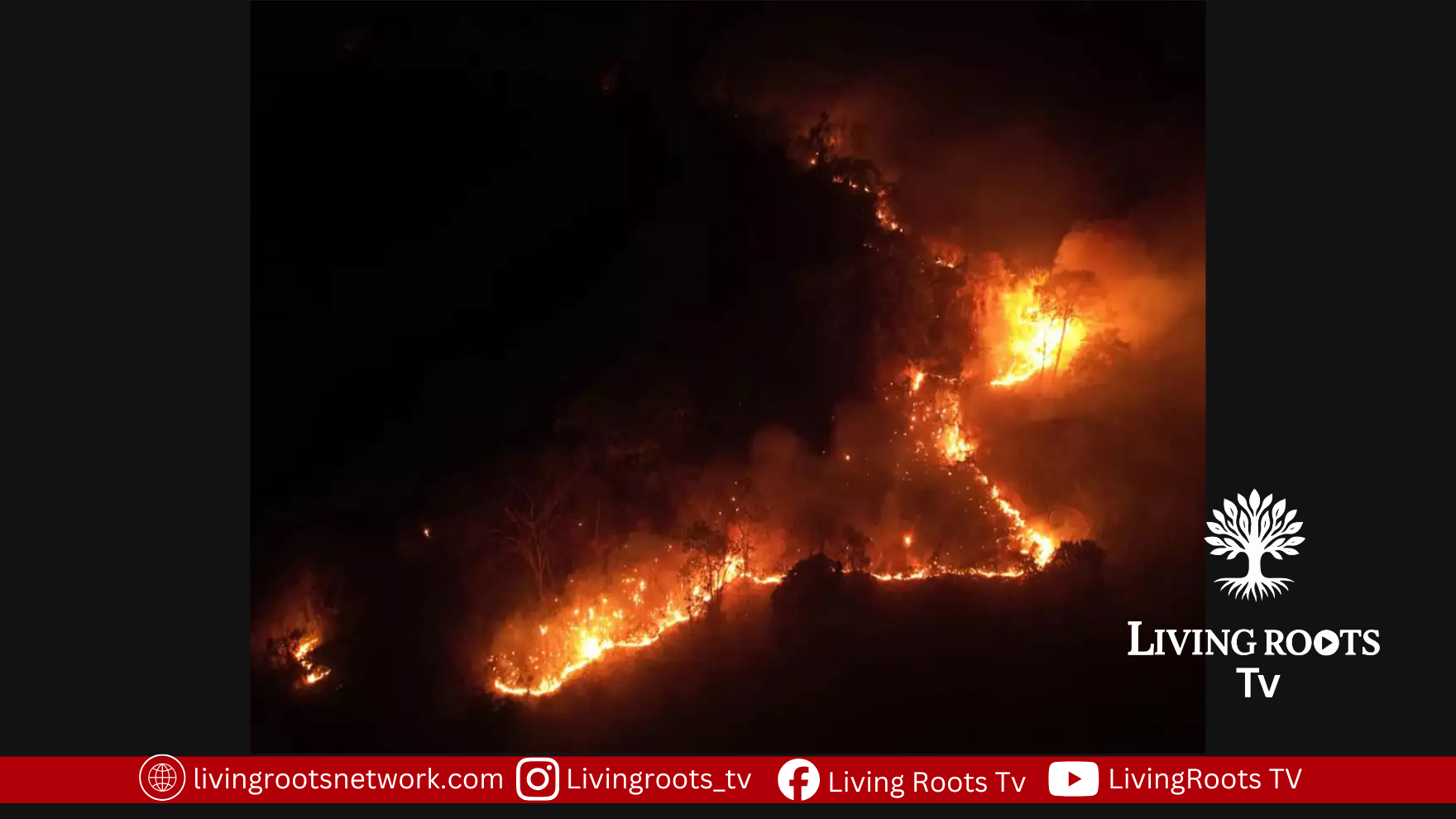
Arunachal Forest Blaze: IAF Airlifts 66,000 Litres of Water in Firefighting Operation
Arunachal Pradesh | March 2026 A forest fire broke out in East Siang district of Arunachal Pradesh in early March 2026, prompting an urgent response from local authorities, the Indian Army, and the Indian Air Force. The blaze was reported in a forested area near the Sigar military station close to Pasighat, raising concerns due to its proximity to defence infrastructure and nearby settlements. The fire was first reported on March 9, 2026, when flames began spreading rapidly across dry forest vegetation in the hilly terrain of the district. Dry weather conditions, accumulated forest litter, and strong winds allowed the fire to spread quickly through surrounding forest areas. Officials have stated that the exact cause of the fire remains under investigation. However, preliminary assessments indicate that seasonal dryness, rising temperatures, and highly combustible forest debris may have contributed to the rapid spread of the blaze. In several parts of Northeast India, forest fires during this time of year are often linked to prolonged dry conditions and occasional human activities such as land clearing or shifting cultivation. To control the situation, multiple agencies were mobilized. The Indian Air Force deployed a Mi-17 V5 helicopter to carry out aerial firefighting operations in the affected Mebo and Sigar areas near Pasighat. Using a specialised firefighting system known as a “Bambi Bucket,” the helicopter conducted multiple sorties, lifting water from the Siang River and dropping it directly over the fire-affected forest. During the operation, approximately 66,000 litres of water were released over the blaze in an effort to suppress the flames and prevent further spread. The Bambi Bucket system involves a large water container suspended below the helicopter with a cable. The aircraft collects water from nearby rivers or water bodies and releases several thousand litres at a time over targeted areas of the fire zone. Such aerial operations are particularly crucial in mountainous and densely forested terrain like Arunachal Pradesh, where ground teams often face difficulties accessing the fire-affected areas. Alongside aerial support, army personnel, forest department teams, and local authorities carried out ground operations to contain the flames and prevent them from spreading to nearby infrastructure. The steep terrain and dense vegetation posed significant challenges for firefighters, making coordinated air and ground operations essential. Authorities have confirmed that no casualties or major structural damage have been reported so far. Fire control efforts have been ongoing, and teams continue to monitor the situation closely to ensure the flames are fully contained. The incident also highlights a broader concern over rising forest fire incidents across parts of Northeast India, particularly during the dry season when forests become highly vulnerable to ignition. Officials have urged residents living near forest areas to avoid activities that could accidentally trigger fires, including burning dry vegetation or leaving open flames unattended